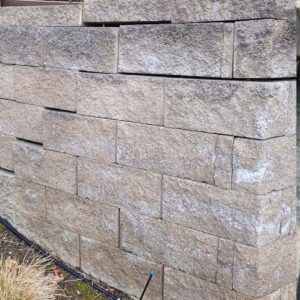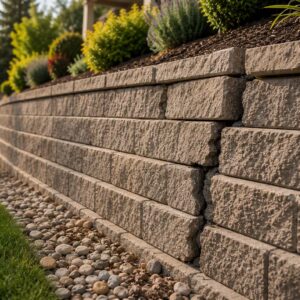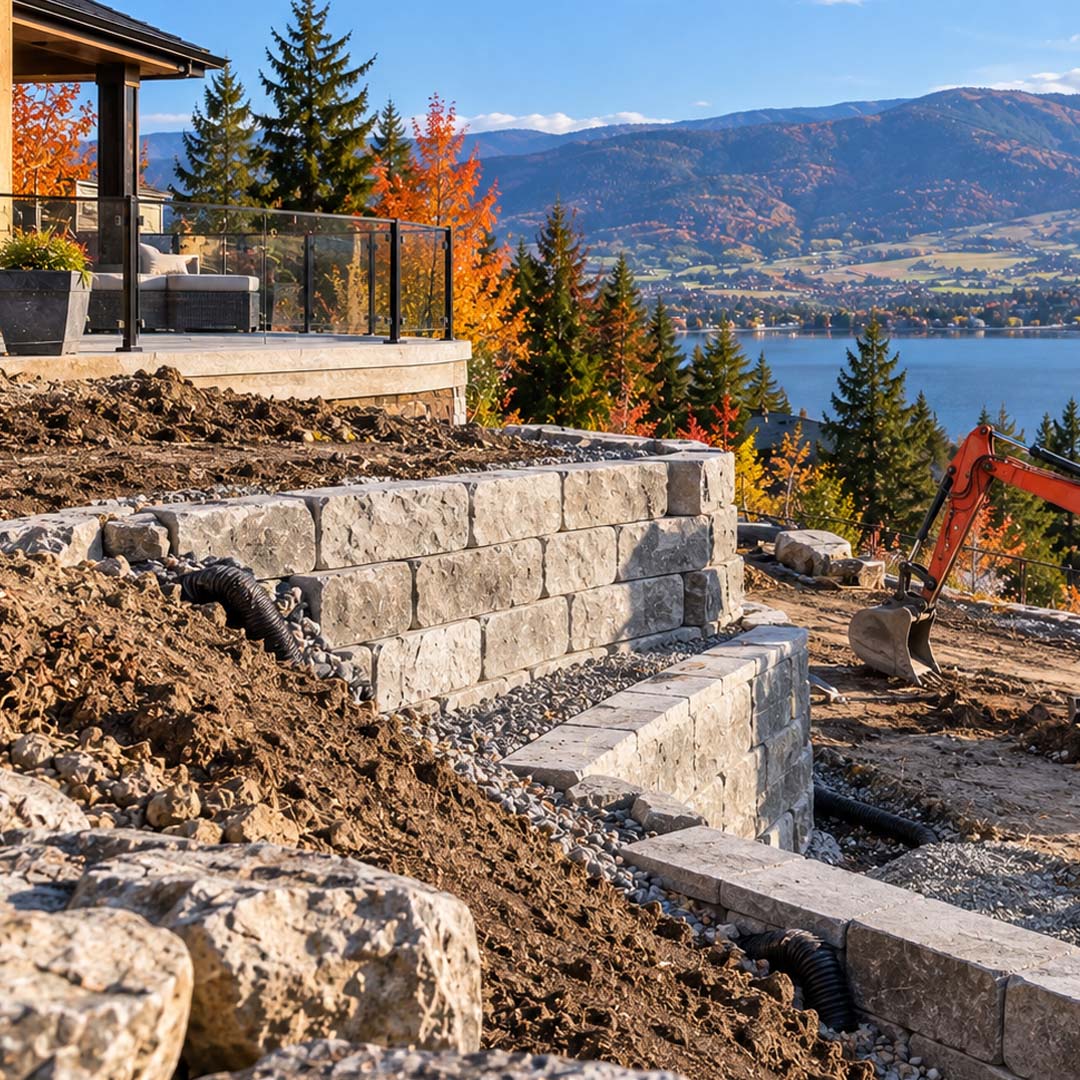
When most homeowners think about major outdoor construction, spring and summer usually come to mind. But if a retaining wall is on your list, fall can actually be an excellent time to get the work completed.
September and October can offer favourable conditions for excavation and construction throughout the Okanagan, while completing the project before winter can help address drainage, erosion or slope problems before snow and spring runoff arrive.
That doesn’t mean every retaining wall should automatically be built in the fall. Site conditions, weather, engineering requirements and the scope of the project all need to be considered.
Here’s what Okanagan property owners should know.
Why Fall Can Be a Good Time for Retaining Wall Construction
One of the advantages of fall construction is that the intense heat of July and August has usually passed, while the ground may still be suitable for excavation.
For properties where landscaping has already been disturbed or where a slope needs to be stabilized, completing the retaining wall before winter can also allow the site to be secured rather than leaving unfinished excavation exposed for several months.
If you’re still determining what type of wall is appropriate for your property, start with Choosing the Right Retaining Wall for Your Okanagan Property.
Deal With Drainage Before Winter
Drainage is one of the most important considerations in retaining wall construction.
Water needs somewhere to go. If it becomes trapped behind a retaining wall, pressure can build and contribute to movement, bulging and eventual failure.
Fall precipitation, snow accumulation and spring snowmelt can all expose weaknesses in an existing drainage system.
If you already have a retaining wall, watch for water appearing through unexpected areas, erosion around the wall, movement or sections beginning to lean.
We explain these warning signs in more detail in Signs Your Retaining Wall May Be Failing in Kelowna.
Addressing drainage and slope problems before winter may help prevent an existing issue from becoming more serious by spring.
Fall Is a Good Time to See What Your Property Is Doing
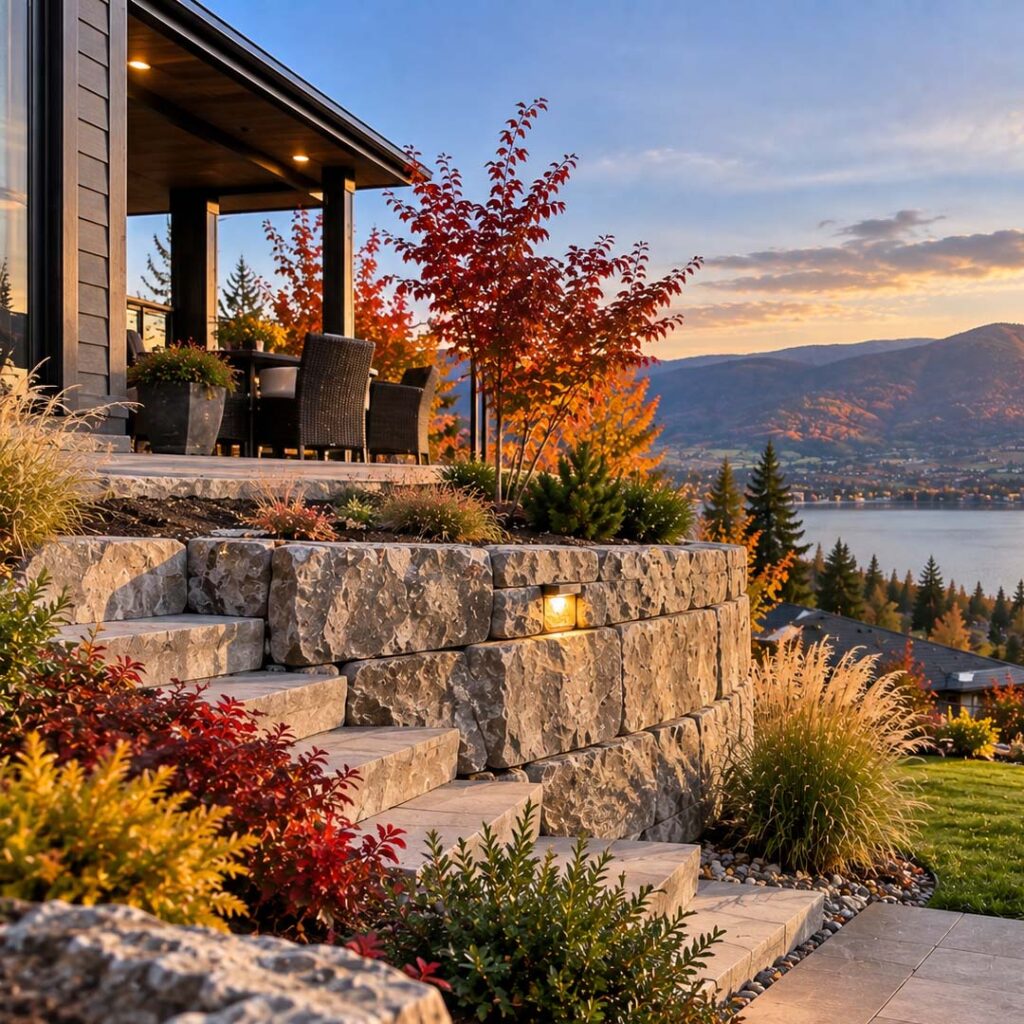
After irrigation and summer watering begin to slow down, homeowners often get a clearer picture of how their property handles natural precipitation.
Watch what happens when it rains.
Where does the water travel? Does it collect behind an existing wall? Is soil washing down a slope? Are there areas around the house where water pools?
These observations can be extremely useful when determining whether a retaining wall, drainage improvements or grading changes are required.
A retaining wall shouldn’t simply hold back soil. It needs to work with the drainage and grading of the entire property.
Don’t Wait for a Wall to Fail
If an existing wall is already leaning, cracking, separating or showing signs of movement, waiting through another winter isn’t always the best approach.
Freeze-thaw cycles and water movement can worsen existing problems.
Small retaining wall issues can sometimes indicate much larger problems behind the visible face of the wall. Our article Why Retaining Walls Fail in the Okanagan and How to Prevent It explains why drainage, base preparation and construction methods matter so much.
Having the wall assessed in fall gives you time to determine whether it needs repair, replacement or simply continued monitoring.
What Happens Before Construction Begins?
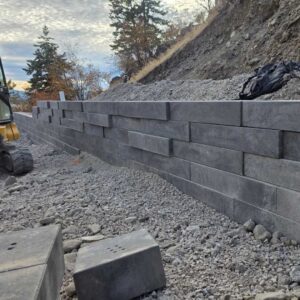
A properly built retaining wall starts well before the first block or stone is installed.
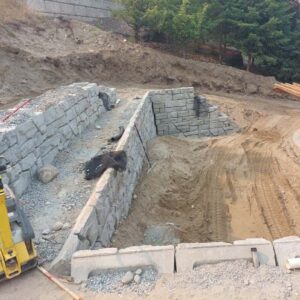
Depending on the site, preparation can include excavation, removal of an existing wall, grading, drainage installation, base preparation and dealing with rock or unsuitable material.
This is particularly relevant on Okanagan properties where steep slopes, rocky ground and difficult access are common.
Fuller’s recently invested in new specialized crushing equipment that will give our team another option for processing suitable concrete and rock directly at certain job sites. You can learn more about that investment in Better Site Preparation for Okanagan Retaining Walls With New Crushing Equipment.
Having excavation, construction and site preparation capabilities within the same team can make it easier to look at the entire property rather than treating the retaining wall as an isolated feature.
What About Landscaping Around the Wall?
Another advantage of building in fall is that the major construction can potentially be completed before spring landscaping begins.
If a retaining wall requires excavation, there’s little benefit in installing expensive planting or finishing surrounding areas first and then disturbing them again to build the wall.
The usual order should be to deal with major excavation, drainage and structural work first. Landscaping and planting can then be completed when conditions are appropriate.
If the project also includes larger changes to the property, Fuller’s provides landscaping services throughout the Okanagan as well as retaining wall and concrete construction.
Can Retaining Walls Be Built All Winter?
Not necessarily.
As temperatures fall and the ground begins to freeze, excavation and construction conditions change. Heavy precipitation can also affect access and soil conditions.
That’s why September and early fall can be such a useful window. There may still be time to complete the work under favourable conditions without pushing the project into winter.
The exact timing will always depend on the property, weather and scope of work.
Should You Start Now or Wait Until Spring?
If your existing retaining wall is performing well and you’re simply thinking about a future improvement, waiting may be perfectly reasonable.
But if you’re seeing erosion, drainage problems, movement or an unstable slope, it’s worth having the property assessed before winter.
You don’t necessarily have to begin construction immediately. Understanding what’s happening now gives you the information needed to determine whether the project can wait.
Fuller’s builds retaining walls throughout Kelowna and the Okanagan and can assess the excavation, drainage and site preparation required for your property.
Contact Fuller’s Retaining Walls for an estimate if you’re considering a new wall or are concerned about an existing one.
Frequently Asked Questions
Is September a good time to build a retaining wall in Kelowna?
It can be. Fall often provides workable conditions for excavation and retaining wall construction before winter weather arrives. The suitability of the timing depends on the property, soil conditions, weather and scope of the project.
Should I repair a leaning retaining wall before winter?
A leaning wall should at least be assessed. Movement can indicate drainage, soil pressure or structural problems, and winter moisture and freeze-thaw conditions may contribute to further movement.
Does a retaining wall need drainage?
Most retaining walls require appropriate drainage to prevent water pressure from building behind the wall. The drainage system required depends on the wall design and site conditions.
Can landscaping be completed after a fall retaining wall project?
Yes. In many cases it makes sense to complete excavation, drainage and retaining wall construction first and finish planting or other landscaping afterward or the following spring.
Can Fuller’s remove an existing retaining wall?
Depending on the project, Fuller’s can handle excavation and site preparation associated with replacing an existing retaining wall. The scope can be assessed during the estimate.