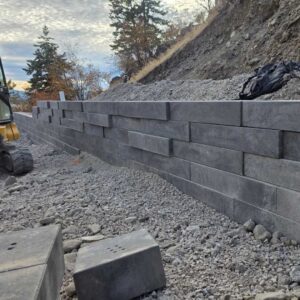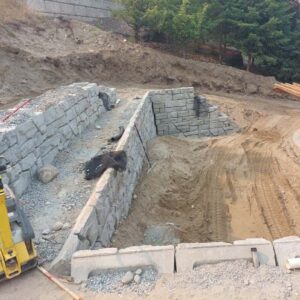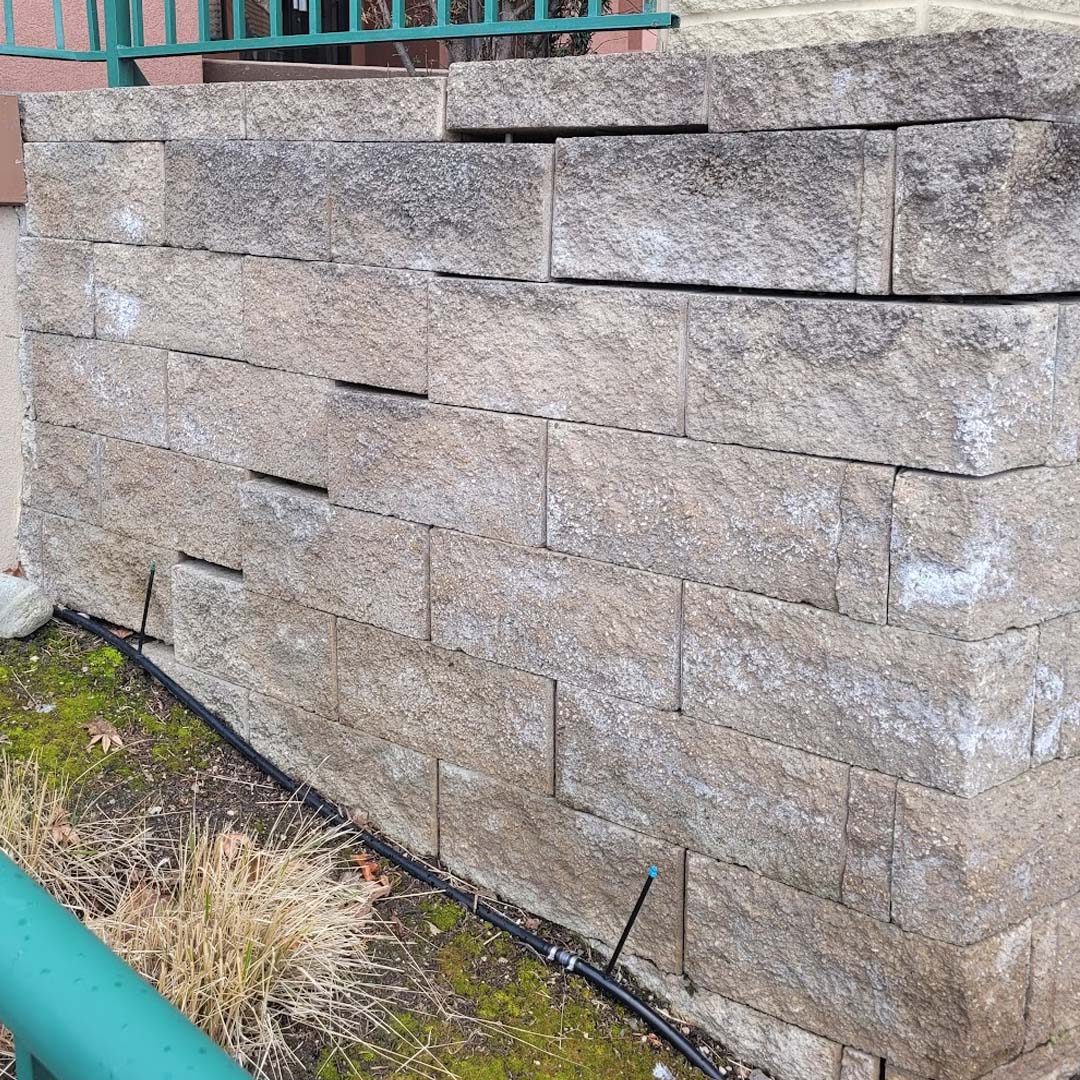
Retaining walls in the Okanagan most commonly fail due to improper drainage, inadequate base preparation, and lack of engineering for slope pressure. While many walls appear structurally sound at installation, hidden water pressure and soil movement often lead to long-term issues.
Understanding these risks helps homeowners and builders avoid costly reconstruction.
The Most Common Cause: Poor Drainage
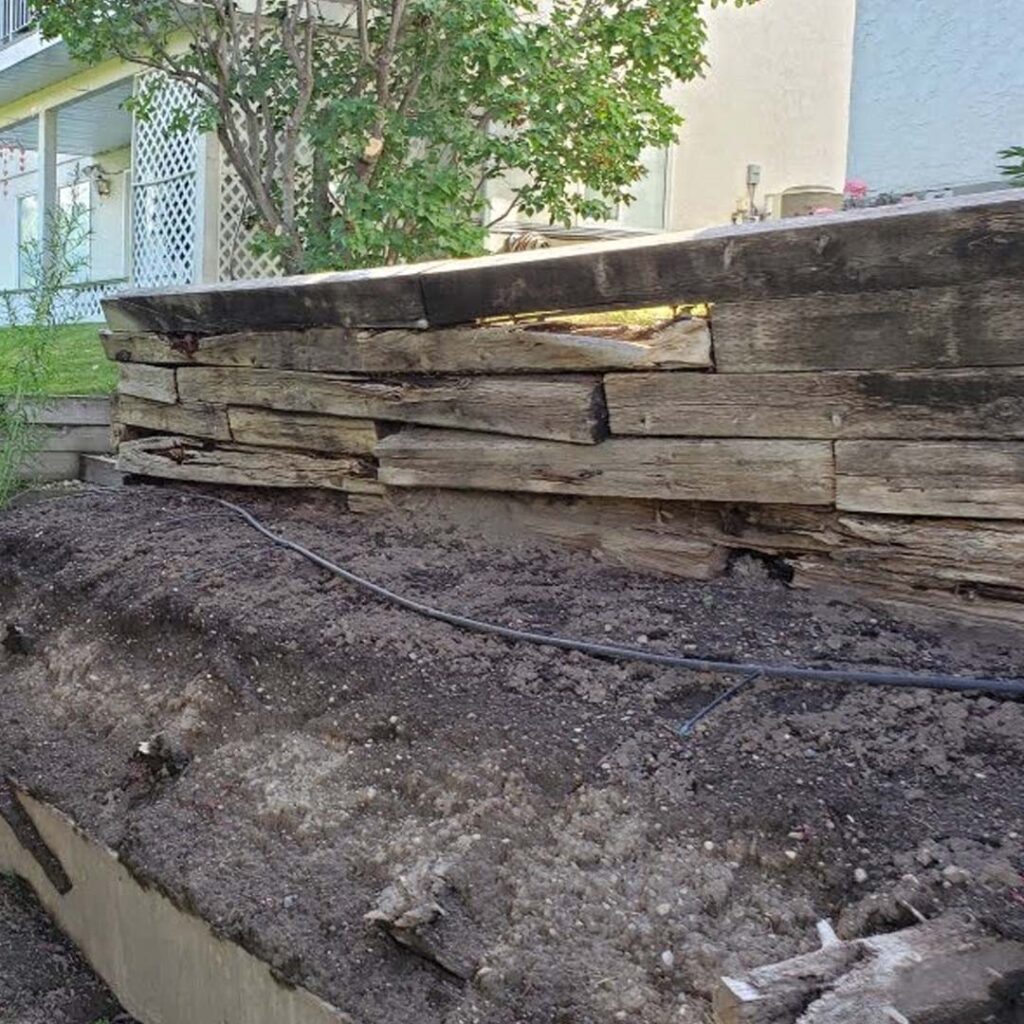
Water buildup behind a retaining wall creates hydrostatic pressure. In Kelowna’s freeze–thaw climate, this pressure increases during seasonal transitions.
Without proper drainage systems, walls may:
- Bow outward
- Crack
- Separate at joints
- Lean over time
Drainage must be integrated during construction, not added later.
Inadequate Base Preparation
Retaining walls require:
- Compacted granular base
- Proper excavation depth
- Stable soil conditions
Failure often begins beneath the surface.
Walls Built Without Engineering
Sloped properties throughout the Okanagan often require engineering review. Walls supporting driveways, structures, or significant grade changes must account for additional loads.
In many cases, failure can be traced back to insufficient structural design rather than visible workmanship issues.
Why Concrete Footings Matter
Strong retaining systems often rely on proper concrete footings and structural base systems to distribute weight and resist movement.
When base systems are compromised, the entire wall system becomes vulnerable.
Signs a Retaining Wall May Be Failing
- Horizontal cracks
- Bulging sections
- Pooling water at the base
- Leaning or shifting
Early assessment can prevent larger structural damage.
How to Prevent Retaining Wall Failure
- Confirm permit requirements
- Use engineered designs where needed
- Ensure proper drainage installation
- Use qualified contractors familiar with Okanagan soil conditions
Preventative planning is far less expensive than reconstruction.
Frequently Asked Questions
How long should a retaining wall last?
Properly built walls can last decades with correct drainage and engineering.
Can drainage be added later?
It is much more effective when installed during original construction.
Are permits always required?
Requirements vary by municipality and wall height.
Do poured concrete walls fail less often?
When engineered and installed correctly, they perform very well under load.