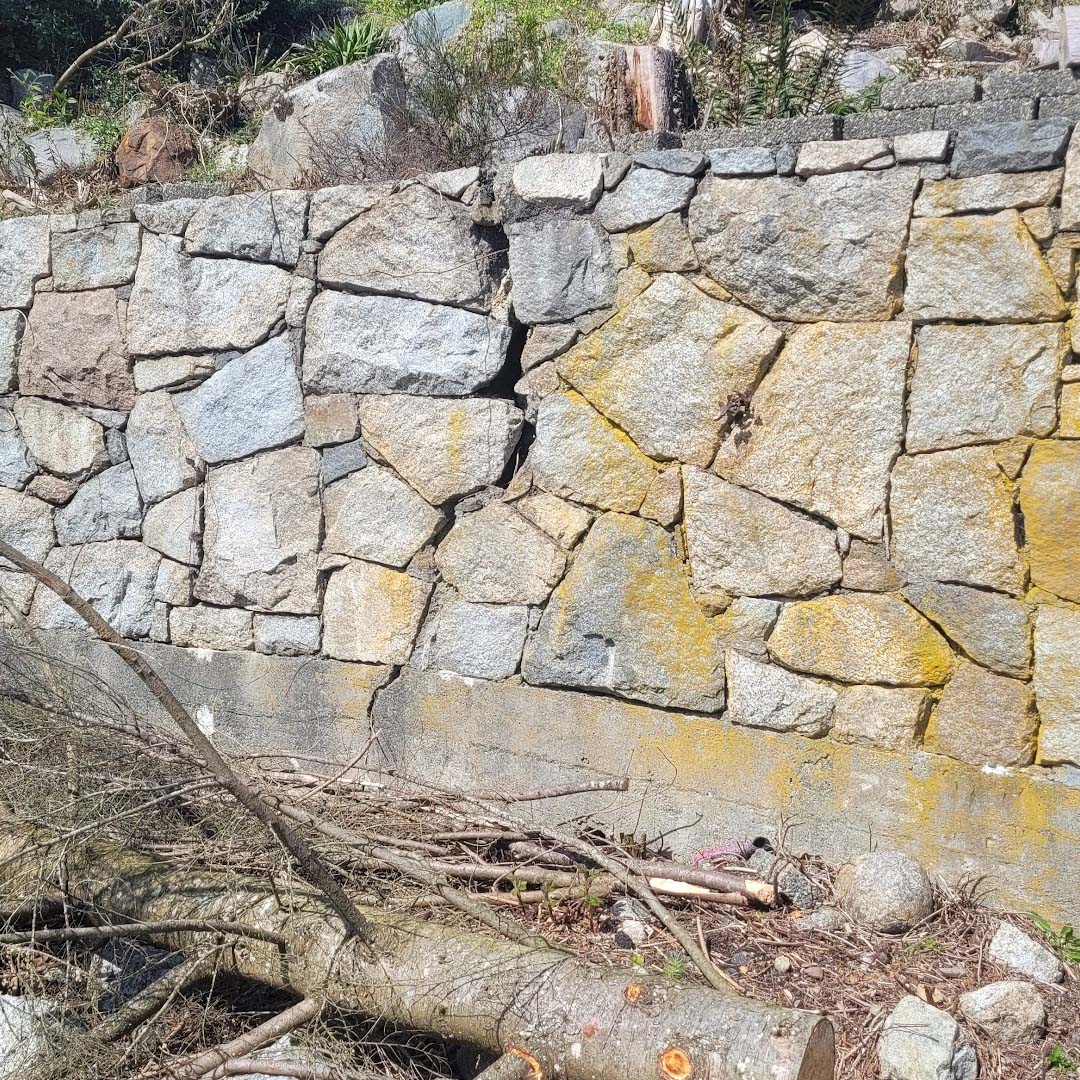
Retaining wall failure is a common issue on sloped properties throughout Kelowna and the Okanagan. While some problems develop slowly over time, others can appear suddenly after heavy rainfall, spring runoff, or seasonal freeze-thaw cycles.
Recognizing early warning signs can help homeowners avoid larger structural damage and costly reconstruction.
Why Retaining Walls Fail in the Okanagan
The Okanagan presents several challenges for retaining walls, including:
- Hillside properties
- Soil movement
- Freeze and thaw cycles
- Drainage pressure
- Expanding and contracting ground conditions
Walls that are improperly designed or built without proper drainage are especially vulnerable.
Leaning or Tilting Walls
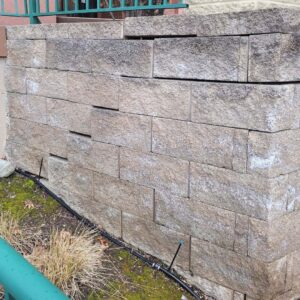
One of the clearest signs of retaining wall failure is visible leaning.
Walls may begin to:
- Tilt forward
- Bow outward
- Separate from adjoining structures
This movement often indicates pressure buildup behind the wall or shifting below the foundation.
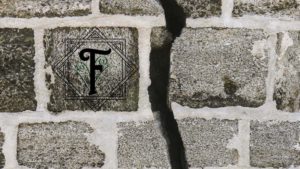
Cracks in the Wall Surface
Cracks may develop due to:
- Soil pressure
- Poor drainage
- Foundation movement
- Freeze-thaw stress
Small surface cracks are not always structural concerns, but larger horizontal cracks may indicate serious issues.
Water Pooling or Drainage Problems
Water should never collect behind or around a retaining wall.
Poor drainage can increase hydrostatic pressure, which is one of the leading causes of wall failure in the Okanagan climate.
Properties experiencing drainage issues may also require grading and concrete drainage improvements to properly direct runoff away from structures.
Soil Erosion Around the Wall
If soil is washing out near the wall, this may indicate:
- Drainage failure
- Base instability
- Inadequate compaction
Erosion problems should be addressed quickly before additional movement occurs.
Separating Steps, Patios, or Walkways
When retaining walls shift, nearby hardscape features often move as well.
This may include:
- Cracked patios
- Uneven walkways
- Stair separation
- Surface settling
Many retaining walls are structurally connected to concrete patios, walkways, and outdoor surfaces on sloped properties.
When Should a Retaining Wall Be Repaired?
Homeowners should seek professional evaluation if they notice:
- Visible movement
- Drainage issues
- Significant cracking
- Soil erosion
- Shifting nearby structures
Early intervention is typically far less expensive than full wall replacement. Get in touch with us now for a free consultation!
Frequently Asked Questions
Can a leaning retaining wall be repaired?
In some cases yes, depending on the severity of movement and underlying cause.
What causes retaining walls to bow outward?
Hydrostatic pressure from trapped water is a common cause.
Are cracks always a serious problem?
Not always, but horizontal or widening cracks should be evaluated professionally.
Does drainage affect retaining wall lifespan?
Yes. Proper drainage is one of the most important factors in long-term wall stability.