A retaining wall is one of the largest investments many homeowners will make in their landscape. When it’s designed and built correctly, it can provide decades of structural support while transforming difficult slopes into functional outdoor living space. When corners are cut, however, the cost of repairing or replacing a failed wall can far exceed what it would have cost to build it properly the first time.
The Okanagan presents unique challenges for retaining walls. Steep hillsides, clay soils, rock excavation, freeze-thaw cycles, periods of prolonged drought and sudden heavy rain all place additional demands on retaining wall systems. That’s why proper planning is just as important as quality workmanship.
Mistake #1: Choosing the Lowest Quote Instead of the Best Solution
It’s natural to compare prices when requesting estimates, but retaining walls aren’t all built to the same standard. Two contractors may quote the same wall using very different excavation methods, drainage systems, base preparation and materials.
A lower price can sometimes mean less excavation, fewer drainage components or insufficient base preparation, all of which increase the likelihood of future movement.
When comparing estimates, ask what’s included rather than focusing solely on the final number.
Mistake #2: Underestimating the Importance of Drainage
If there’s one reason retaining walls fail more often than any other, it’s poor drainage.
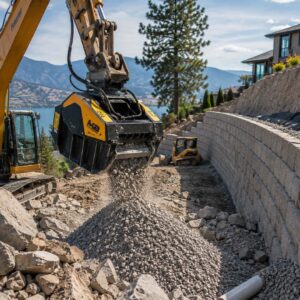
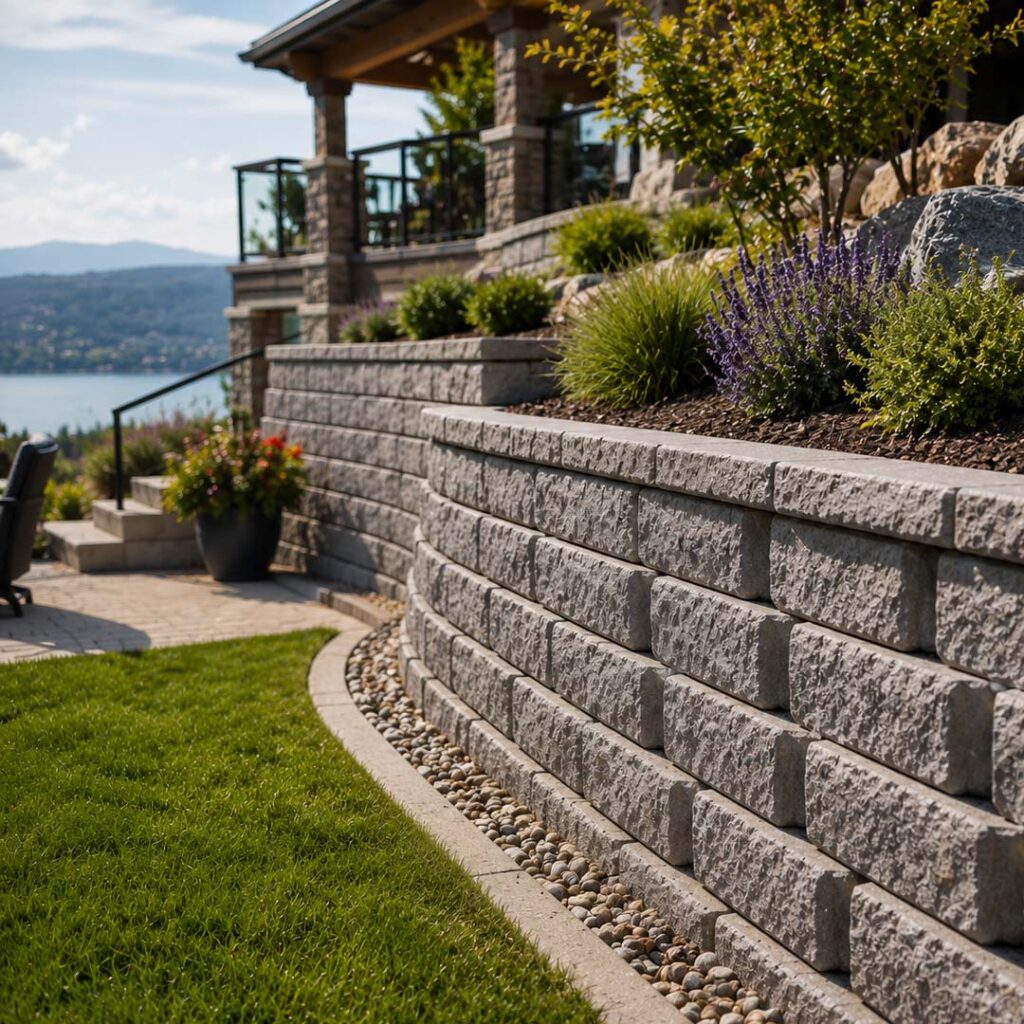
Water naturally builds up behind retaining walls. Without proper drainage stone, perforated drain pipe and outlets to move water away, pressure gradually increases behind the wall. Eventually that pressure can cause bulging, cracking or complete structural failure.
This is especially important in the Okanagan, where dry summers are often interrupted by intense rainstorms. After weeks of hard, dry soil, heavy rainfall can create significant water pressure behind poorly drained walls.
If you’re interested in learning more about common structural problems, read Why Retaining Walls Fail in the Okanagan (And How to Prevent It).
Mistake #3: Building for Today Instead of Tomorrow
Many retaining walls are constructed to solve an immediate problem without considering future plans for the property.
Will you eventually install irrigation?
A swimming pool?
Concrete patios?
Outdoor lighting?
Additional parking?
Planning these improvements before construction begins often saves significant time and money later.
Mistake #4: Ignoring Site Conditions
No two properties in the Okanagan are exactly alike.
Some lots consist almost entirely of rock, while others contain expansive clay soils that expand and contract as moisture levels change. Sloped properties may require engineered solutions, multiple wall tiers or additional drainage measures.
Choosing the right wall begins with understanding the property, not selecting a block from a catalogue.
If you’re still comparing different retaining wall systems, our article on Choosing the Right Retaining Wall for Your Okanagan Property explains the advantages of various materials and construction methods.
Mistake #5: Waiting Too Long to Address Small Problems
Many retaining wall failures begin with subtle warning signs.
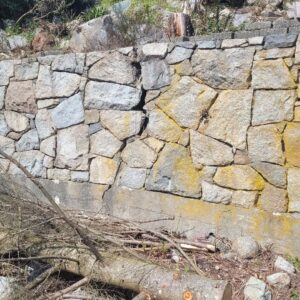
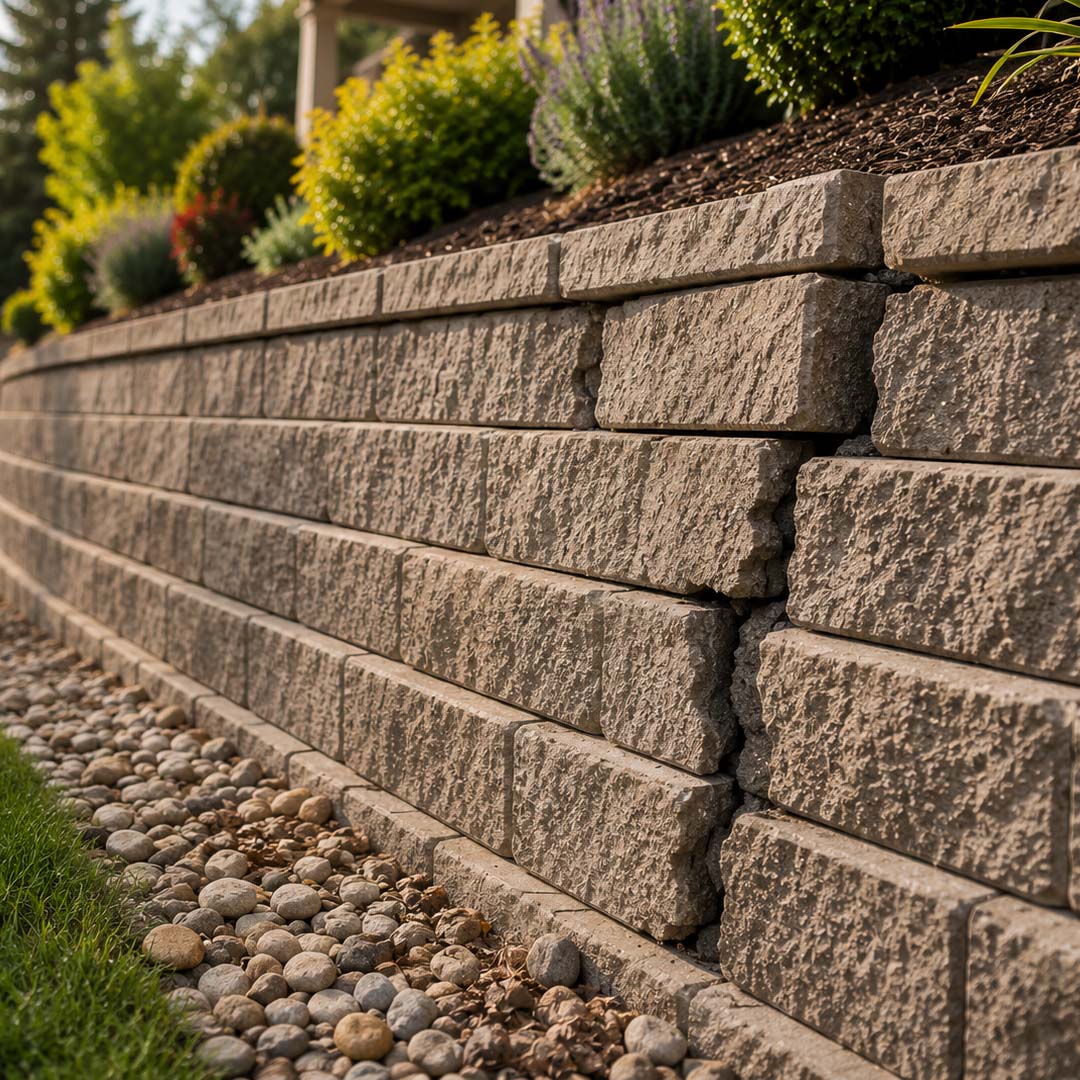
These may include slight leaning, cracked caps, gaps between blocks, poor drainage or areas where soil begins washing out after heavy rain.
Addressing these issues early is almost always less expensive than allowing them to worsen over several seasons.
If your retaining wall has been in place for several years, summer is an excellent opportunity to inspect it while weather conditions are favourable. Our guide to Summer Is the Best Time to Inspect Your Retaining Wall outlines what homeowners should look for.
Mistake #6: Forgetting About the Rest of the Landscape
A retaining wall should never be viewed as a standalone project.
The most successful outdoor spaces combine retaining walls with thoughtful grading, drainage, irrigation, planting and hardscape features that all work together.
Many homeowners choose to complete additional improvements such as Professional Landscaping Services or Concrete Patios and Walkways at the same time, creating a cohesive outdoor space while reducing disruption and future construction costs.
Planning for Okanagan Conditions
Wildfire smoke, prolonged drought and periods of intense rainfall have become increasingly common throughout the Okanagan. While smoke itself won’t damage a retaining wall, the changing weather patterns that accompany these seasons make proper drainage and site preparation more important than ever.
A retaining wall built with local soil conditions, drainage requirements and long-term property plans in mind will continue performing long after trends and landscaping styles have changed.
Invest Once, Build It Right
Retaining walls are designed to support thousands of kilograms of soil while protecting your property from erosion and creating usable outdoor living space. They aren’t the place to compromise on planning or construction quality.
Whether you’re replacing an aging retaining wall, developing a sloped property or planning a complete backyard renovation, investing in proper design from the beginning can save substantial time, money and frustration in the years ahead.
At Fuller’s Retaining Walls, we build retaining wall systems specifically for the unique conditions found throughout Kelowna and the Okanagan. If you’re considering a new retaining wall or have questions about an existing one, contact us today for a professional site consultation.
Frequently Asked Questions
Why do retaining walls fail?
Poor drainage, inadequate base preparation, improper installation and changing soil conditions are among the most common causes of retaining wall failure.
Can a leaning retaining wall be repaired?
Sometimes. Minor movement may be repairable, while significant structural movement often requires partial or complete reconstruction. A professional inspection is the best place to start.
How long should a retaining wall last?
A professionally designed and constructed retaining wall can last several decades when built with proper drainage and quality materials.
Does every retaining wall need drainage?
Yes. Proper drainage is one of the most important components of a successful retaining wall, regardless of its size.